Hearing Aid Repair in Dripping Springs
Dr. Juarez repairs and services most makes and models in-house, including hearing aids purchased elsewhere. Many fixes are completed during the same visit, and for repairs that take longer, you get a clear and honest timeline.
See what the visit looks like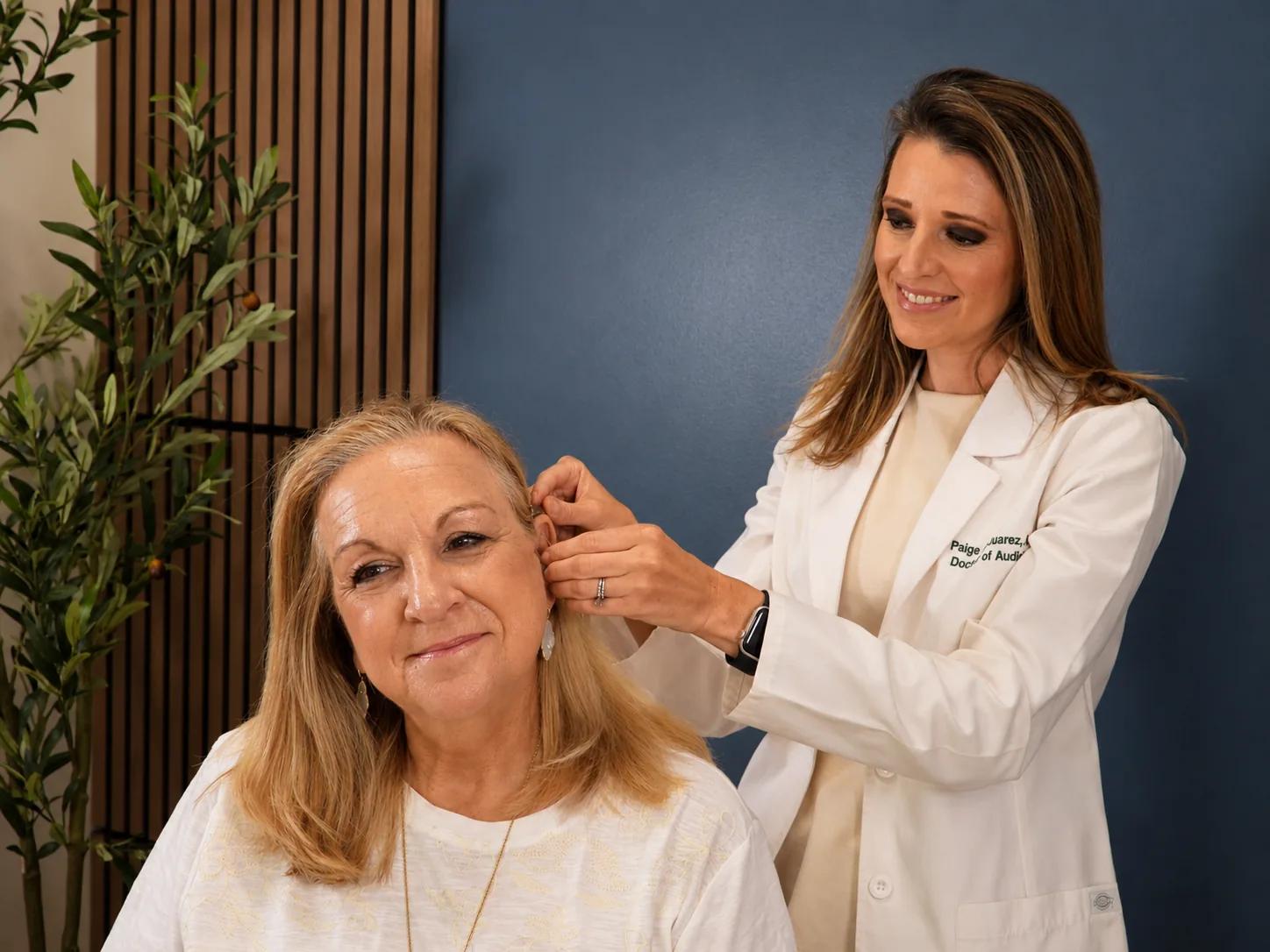 Often same visit
 How a repair goes
What to expect from a hearing aid repair
- Step 1
We find the fault
Bring in your hearing aid, including one purchased elsewhere. Dr. Juarez listens through it, inspects it, and identifies the cause, whether that is a clogged wax guard, a tired receiver, a cracked tube, or a battery contact, before quoting anything.
- Step 2
Fixed on the spot when possible
Clean-and-checks, retubing, wax-guard and dome changes, and receiver swaps are often handled while you wait. If a part needs to be ordered or the aid goes to the manufacturer, you will know the timeline up front.
- Step 3
Re-checked before it goes back on
A repaired aid is verified before you leave. If it was originally fit for hearing loss, real ear measurement confirms it is still delivering the sound your ears need.

The short version
Repair or replace? An honest answer.
Many hearing aids that have gone quiet are simply clogged with wax or in need of a fresh tube, which is often a quick fix. Because recommendations here are based on what the device actually needs, the first goal is always to get more life out of the aids you already own.
When an aid has genuinely reached the end of its life, or a repair would cost more than the device is worth, you will hear that clearly, with the numbers to explain it. Every recommendation is made with your best interest in mind.
- Most makes and models
- ours or not
- While you wait
- for many common fixes
Is this you?
When it is worth booking a visit
-
One of your hearing aids has gone quiet, crackly, or cuts in and out during the day.
-
The sound is weak or distorted even after a fresh battery or a full charge.
-
A tube has cracked, a dome has torn, or a wax guard looks clogged and you are unsure how to change it.
-
You bought your aids elsewhere, perhaps at a big-box store or a clinic that has since closed, and are looking for somewhere to service them.
-
Your aids still work but no longer sound the way they did when they were first fit.
Not sure you see yourself here? Call (512) 503-0024 and talk it through. If a visit is not worth your time, we will say so.
Why it matters
Repair first, and replace when it makes sense.
A quiet hearing aid is often far from finished. More commonly it is a clogged wax guard, a tired receiver, or a cracked tube, small parts with quick fixes. The first goal here is to get more life out of the aids you already own, with recommendations based on what the device actually needs.
Dr. Paige Juarez services most makes and models in-house, including aids purchased elsewhere. She listens through the aid, inspects it, and identifies the actual fault before quoting anything. Many repairs, such as a clean-and-check, a retube, or a receiver swap, are completed while you wait. When a part has to come from the manufacturer, you get a clear timeline up front.
When an aid has genuinely reached the end of its life, or a repair would cost more than the device is worth, you will hear that clearly, with the numbers to explain it. And if a repaired aid was originally fit for hearing loss, real ear measurement confirms it is still delivering the sound your ears need before it goes back on.
Fair questions
Common questions about hearing aid repair
Straight answers, the same ones you would get in the chair.
Will you repair aids I did not buy from you?
Yes. Dr. Juarez services most makes and models regardless of where they were purchased, including pairs from big-box stores and clinics that have since closed. Bring them in, and she will let you know what they need.
How long does a repair take?
Many common fixes, such as a clean-and-check, a new tube or dome, a wax guard, or a receiver swap, are completed while you wait. Repairs that require a manufacturer part take longer, and you will get a clear timeline before anything is sent off.
Is it worth repairing an older aid?
Sometimes it is, and sometimes a replacement is the better value. Either way, you get a straightforward answer with the numbers, so you can decide what makes the most sense for you.
What if it just needs a good cleaning?
Then that is all it gets. Many aids that sound dead are simply blocked with wax, and a thorough cleaning brings them right back. A quick fix stays a quick fix.
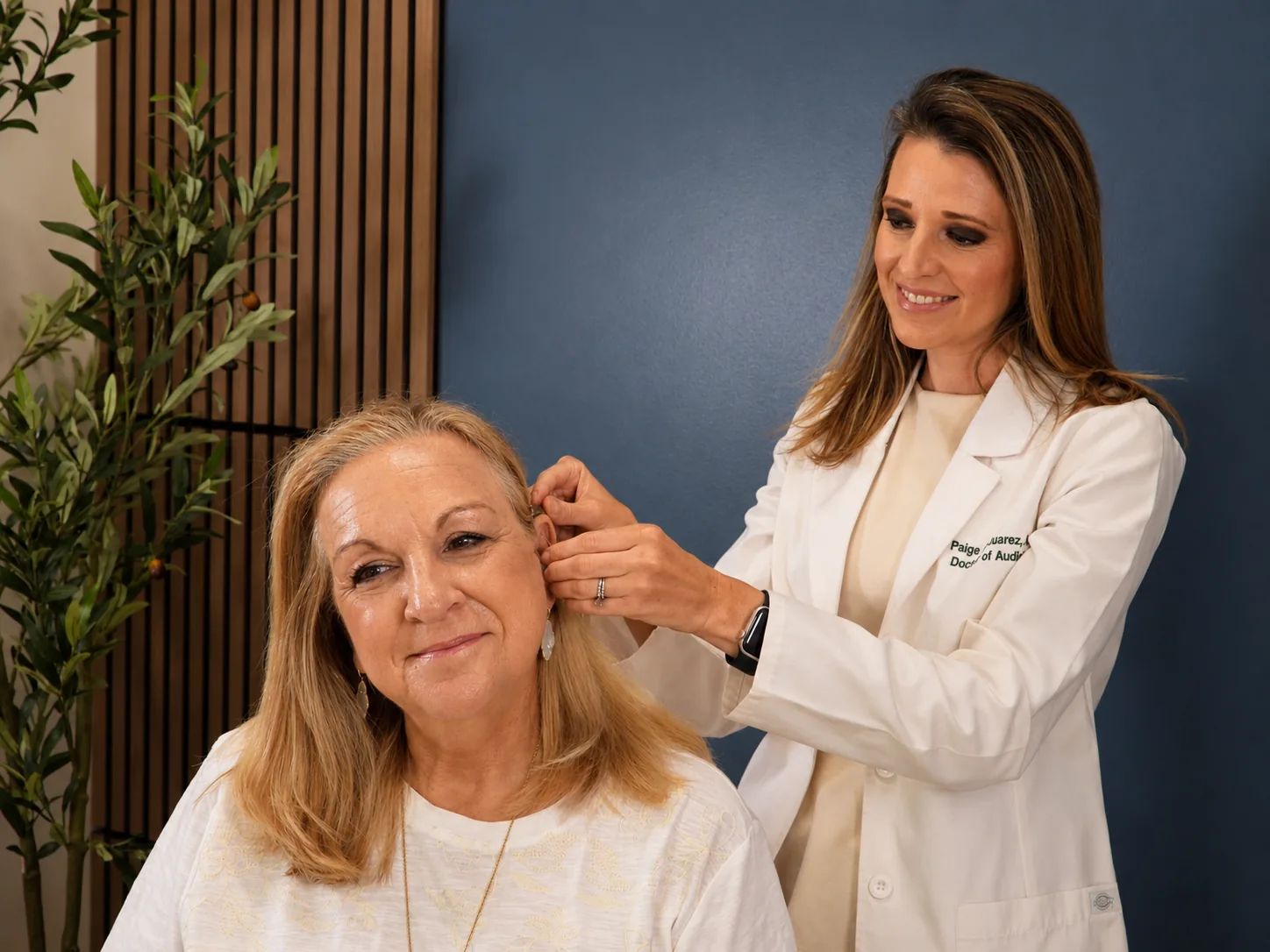
Next step
Hearing aid gone quiet or crackly?
Bring it in, whether or not it was purchased here. Many repairs are completed while you wait, on Hwy 290 near Headwaters in Dripping Springs.
- Where
- 1055 Kibo Ridge Ste 201
Dripping Springs, TX 78620 - Hours
- Mon–Thu 9:00–4:00
Fri 9:00–3:00 - Phone
- (512) 503-0024