Article
Tinnitus is one of the most searched hearing concerns out there, and also one of the most misunderstood. Maybe you've noticed a ringing that shows up at night, or a hiss that seems louder some days than others, and you've wondered if it's something to worry about or just part of getting older. At Dripping Springs Hearing & Tinnitus, this is a big part of what we do. We help patients throughout the Hill Country make sense of that sound and figure out what, if anything, it's telling them.
The Sounds Patients Describe
Tinnitus isn't one single sound. Patients describe it in all kinds of ways: a steady ringing, a low buzz, a hiss like static, or a pulsing that seems to match a heartbeat. Some people hear it only in quiet rooms. Others notice it all day, everywhere.
It can be constant or it can come and go. It can affect one ear or both. And the volume isn't fixed either, some days it's barely there, other days it's impossible to ignore.
Here's the thing worth knowing early on: tinnitus itself is a symptom, not a disease. It's your auditory system signaling that something changed, somewhere along the hearing pathway. That's usually the part patients find most reassuring once they hear it.
What We'll Ask About
When a patient comes in with tinnitus concerns, we're listening for patterns. There are a handful of common contributors we see over and over in this practice, and part of the evaluation is simply working through them together.
- Noise exposure. Concerts, power tools, years of loud work environments. Even one especially loud event can trigger it.
- Earwax buildup. Something as simple as excess wax pressing against the eardrum can cause or worsen tinnitus, and it's one of the easier things to rule out.
- Stress and sleep. Tinnitus tends to get louder, or more noticeable, during stressful stretches. Fatigue plays a role too.
- Age-related hearing change. As hearing sensitivity shifts over the years, the brain sometimes fills in gaps with phantom sound. It's a well-documented connection.
We'll ask about your history with loud environments, your general health, medications, sleep, and stress levels. None of this is to alarm you. It's how we build a clear picture of what's driving the sound you're hearing.
How a Tinnitus Evaluation Works Here
A tinnitus evaluation starts with a conversation, not just a test. We want to know when you first noticed the sound, what it sounds like to you, and how it's affecting your daily life, whether that's sleep, concentration, or just peace of mind.
From there, we move into a comprehensive hearing evaluation, because tinnitus and hearing loss are so often connected. We're measuring your hearing across different frequencies, checking for any patterns that line up with what you're describing, and looking at the health of your ear canal and eardrum along the way.
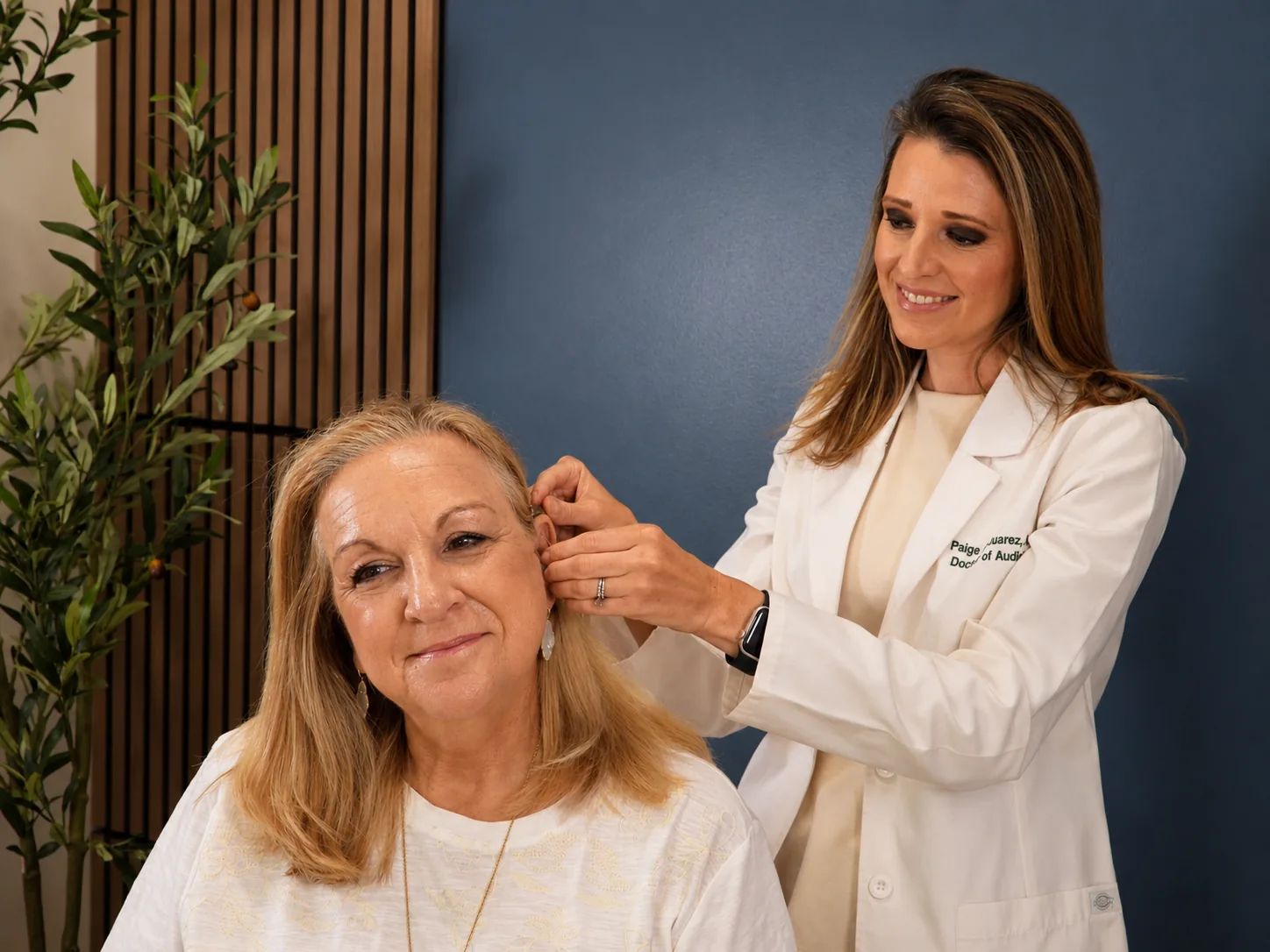
As a CH-TM certified provider, Dr. Juarez has advanced training specifically in tinnitus assessment and management, which means the evaluation goes beyond a standard hearing test. We're looking at the full picture: your hearing, your history, and how the tinnitus itself behaves.
Management Approaches We Offer
Tinnitus doesn't have a single fix that works for everyone, and it's not something to panic over. In most cases, it's manageable, and there are real, evidence-based paths forward.
Depending on what we find, that might include sound therapy options that give your brain something else to focus on, hearing aids if there's an underlying hearing loss contributing to the sound, or lifestyle guidance around sleep, stress, and the habits that tend to make tinnitus more noticeable.
Tinnitus Retraining Therapy is part of what we offer as well, built around the idea that the brain can learn to push the sound into the background over time. What works best really does depend on your specific situation, which is why the evaluation matters so much before jumping to any one approach.
Schedule a Tinnitus Evaluation in Dripping Springs
October is International Tinnitus Awareness Week, and if you've been living with a ringing, buzzing, or hissing sound and wondering whether it's worth mentioning to someone, this is a good time to stop wondering.
Dr. Paige Juarez has called Dripping Springs home for a decade, and as a CH-TM certified Doctor of Audiology, tinnitus care is one of her specific areas of focus, not an afterthought tacked onto a hearing aid visit. As a locally owned, independent practice, every recommendation we make is about what's actually right for you.
If you're in Dripping Springs, Wimberley, Johnson City, Blanco, Southwest Austin, or anywhere nearby in the Hill Country, give us a call at (512) 503-0024 to schedule a tinnitus evaluation this October. You don't have to keep wondering what that sound means.